LINKING SERIOUS BUYERS TO THE BEST SUPPLIERS

Serving the UK & IE plastics industry

Tag: plastic manufacturing

3D Printing vs Injection Moulding: When to Use Each for Plastic Parts

For most UK manufacturers, the useful question is not “which is better” but “which is the right tool for this job”. Both processes are mature, both have specialist UK and Irish suppliers, and both are often used on the same product at different stages of its life. 3D-printed prototypes are often validated into a production tool, or short-run 3D-printed service parts support a product that was originally moulded. In this guide, we’ll summarise the best use cases for each process, and explain how recent developments may have tipped the scale, depending on your project volumes and part geometry.

Continue reading

Stay connected via Google News Add PlastikCity as a preferred source on Google

Vacuum Forming: A UK Buyer’s Guide to the Process & When to Use It

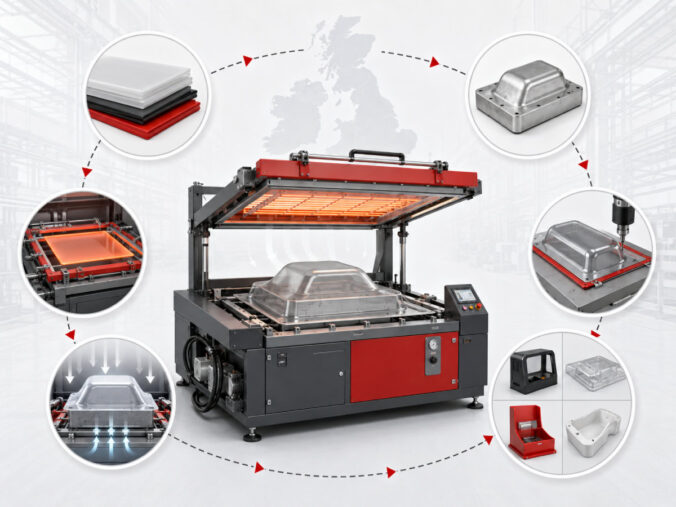
Vacuum forming is one of the most cost-effective ways to produce plastic parts, particularly for larger, thinner-walled components in lower volumes. It works by heating a sheet of plastic until it is soft, then drawing it down over a mould using vacuum so it takes the mould’s shape. The tooling is far simpler and cheaper than an injection mould, which makes vacuum forming the right answer for a whole category of parts where injection moulding would be uneconomical.

Continue reading
Stay connected via Google News Add PlastikCity as a preferred source on Google

Low Volume vs High Volume Moulding: Which is Right for Your Project?

The dividing line between low volume injection moulding and high volume work is not a single, fixed number. In most UK conversations, “low volume” means annual quantities below around 50,000 units, and “high volume” means quantities above roughly 250,000, but regularly stretching into the millions. Everything between those two is a middle ground where either approach can work, and the right answer depends on the economics of the tool as much as the part itself.

Continue reading
Stay connected via Google News Add PlastikCity as a preferred source on Google

What is Injection Moulding? A UK Buyer’s Guide

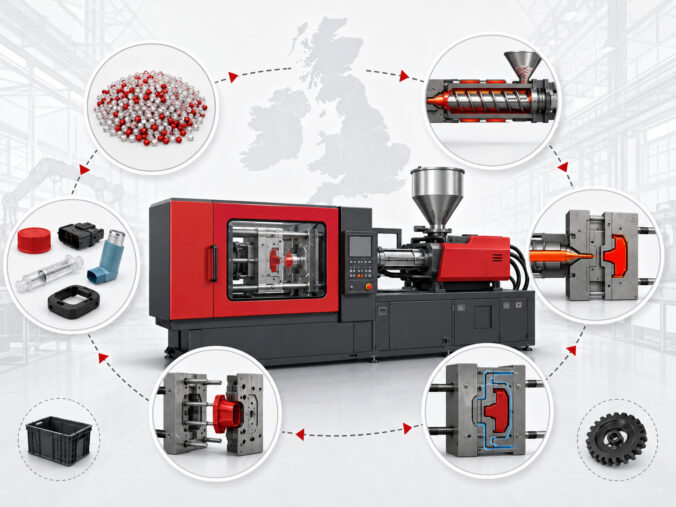
Injection moulding is the manufacturing process behind most plastic parts produced in quantity. The keyboard you are typing on, the bottle caps in your kitchen, the casing of your TV remote, the dashboard of your car, the syringes used in your last hospital visit: all of these are almost certainly injection-moulded. The process is the workhorse of plastics manufacturing, and across the UK and Ireland it produces enormous quantities of parts every year in factories from Aberdeen to Cornwall.

Continue reading
Stay connected via Google News Add PlastikCity as a preferred source on Google

Top 9 UK Plastic Injection Mould Toolmakers

Plastic injection mould toolmakers are specialists in designing and manufacturing precise mould tools used in the plastic injection moulding process. These moulds are crucial for producing high-quality plastic components with consistent accuracy and detail. Injection mould toolmakers work closely with engineers and designers to create custom tools that meet specific production requirements.

Choosing the right injection mould toolmaker is vital for successful plastic injection moulding. Precision and quality in toolmaking ensure high accuracy and minimal defects, while durable moulds reduce the need for repairs, saving time and costs. Efficient, well-designed moulds lower production costs by reducing cycle times and waste. Additionally, a reliable toolmaker provides ongoing support, optimising mould performance and ensuring consistent, high-quality production.

Continue reading
Stay connected via Google News Add PlastikCity as a preferred source on Google

3 Reasons to Think Twice Before Purchasing Your Next Mould

Traditional manufacturing methods such as injection moulding have been around for decades and remain a solid option for most projects once the market demand and product requirements have all been validated. However, there are times when considering other options can provide some major benefits.

Continue reading

Stay connected via Google News Add PlastikCity as a preferred source on Google

The Positive Impact of Plastic

Plastic is an incredibly versatile material with a huge range of applications due to the multiple forms, textures and strengths it can take. There are many positive impacts of plastic on the environment that are generally unrecognised, so here are a couple of benefits that you may be surprised to hear…

Continue reading

Stay connected via Google News Add PlastikCity as a preferred source on Google

Brexit – Should we Export, or Stop Importing?

By Simon Anderson – MD of LVS Small Plastic Parts

Like most SME’s, the Brexit vote came as a shock to LVS Small Plastic Parts last year.  As part of the larger business community, we felt that a status quo would be the best outcome for the manufacturing sector.  Our own business being so heavily aligned to the automotive sector helped to reinforce this opinion.

Continue reading

Stay connected via Google News Add PlastikCity as a preferred source on Google

Thank you China!

Thank you China! You made us better, more efficient, improved lead-times, enabled us to make profit from poor quality tools and now it’s less competitive for the Far East to win more business – overseas competition was a good thing!

Continue reading

Stay connected via Google News Add PlastikCity as a preferred source on Google

Is UK manufacturing benefitting from its new found honesty? Seems so in plastics.

I recall, as young plastic machinery sales engineer in the 80’s, how manufacturing was a pretty unpopular word amongst my friends. I also recall how government grants were often abused by companies, ordering equipment, then running off with the money, or asking suppliers to inflate invoices then keeping the uplift.

Continue reading

Stay connected via Google News Add PlastikCity as a preferred source on Google